


Google is expanding its real-time translation tools for mobile users, bringing its live headphone translation feature to iPhones. The update allows users to translate spoken conversations instantly across dozens of languages—an increasingly valuable tool in a global, travel-driven economy.
Real-Time Translation Comes to iOS
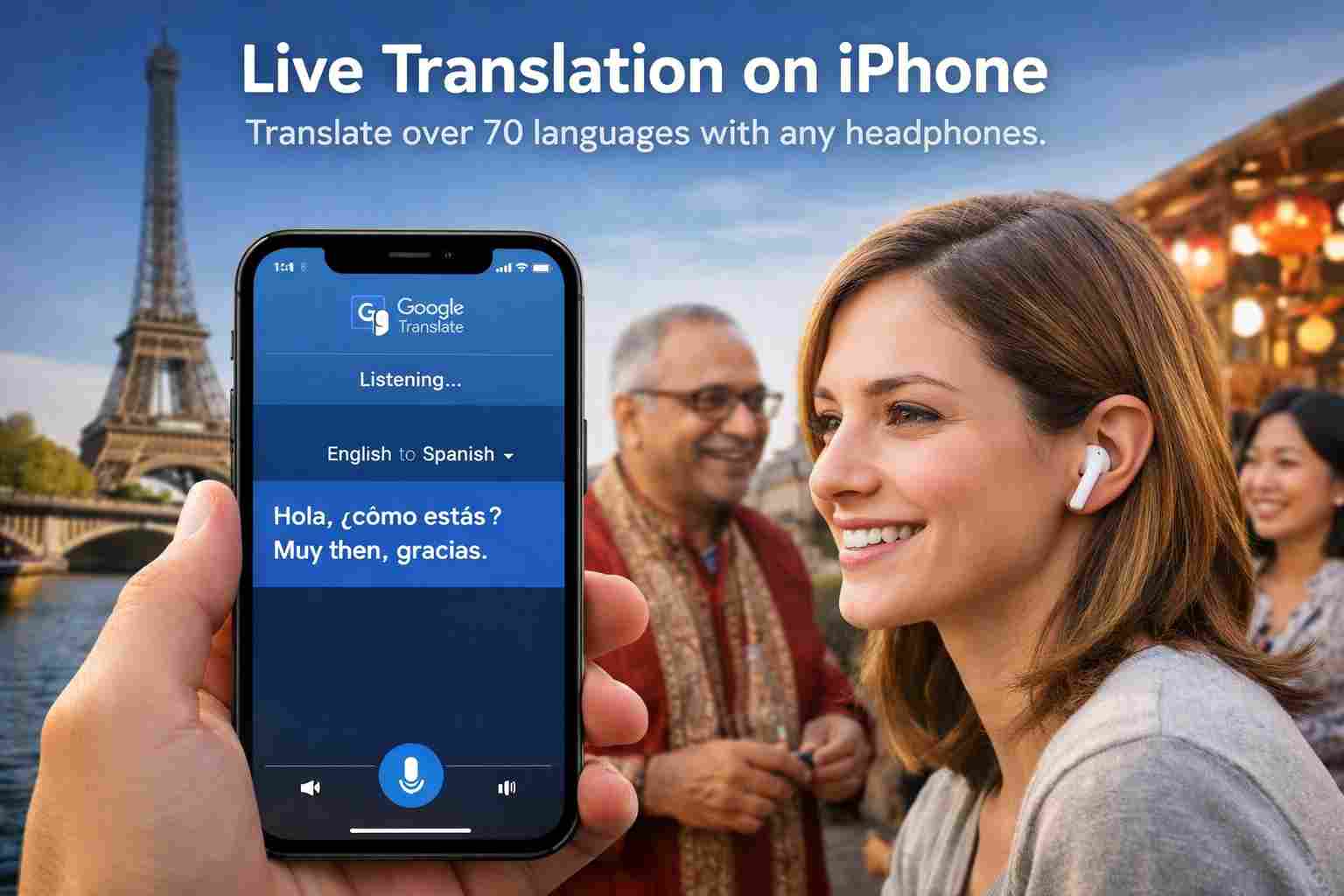
Google Translate now supports live translation through headphones on iOS, enabling iPhone users to follow conversations in real time without needing to look at their screens.
According to Google, the feature works with any standard pair of headphones and supports more than 70 languages. It is also expanding availability across several international markets, including France, Germany, Italy, Japan, Spain, Thailand, and the United Kingdom.
Sasha Kapur, a product manager for Google Translate, said the feature is designed to help users “instantly understand and connect with the world” through natural, seamless audio translation.
How the Feature Works
The live translation tool captures spoken language through a phone’s microphone and delivers translated audio directly into the user’s headphones. It is designed to preserve tone, emphasis, and cadence—elements often lost in traditional translation tools.
This approach makes conversations easier to follow, especially in multi-speaker settings where context and voice differences matter.
For U.S. users, the feature could be particularly useful in diverse, multilingual environments—such as international travel, business meetings, or everyday interactions in cities like New York, Los Angeles, or Miami, where multiple languages are commonly spoken.
Practical Uses: Travel, Family, and Everyday Communication
Google highlights several real-world scenarios where the tool can be especially helpful.
Kapur noted that she frequently uses the feature during family gatherings where Punjabi is spoken, allowing her to follow conversations more naturally. Similarly, travelers can rely on the tool to navigate unfamiliar places, ask for directions, or communicate with locals abroad.
The feature mirrors similar capabilities offered by Apple’s AirPods ecosystem, where live translation is integrated into newer models. However, Google’s version stands out for its broader compatibility, working with virtually any headphones rather than requiring specific hardware.
Broad Language Support
From launch, the feature includes support for more than 70 languages, covering widely spoken global languages such as Spanish, French, Hindi, and Mandarin Chinese, as well as less commonly supported languages like Zulu, Basque, and Icelandic.
This extensive language coverage positions Google Translate as one of the most versatile translation tools available, particularly for users who frequently interact across different regions or cultures.
A Step Forward for Everyday AI Tools
The rollout reflects a broader push by tech companies to integrate artificial intelligence into everyday communication tools. Real-time translation—once limited to specialized devices—is now becoming a standard feature on smartphones.
For iPhone users in the United States and beyond, the addition of live headphone translation offers a practical way to bridge language gaps in real time, whether at home or abroad.
Conclusion
Google’s expansion of live headphone translation to iOS marks a significant step in making real-time communication more accessible. With support for dozens of languages and compatibility with standard headphones, the feature brings powerful translation capabilities into everyday situations—helping users navigate an increasingly interconnected world.

Ambrose Sherman writes for Hardwood Paroxysm, covering news, politics, business, technology, sport, entertainment, and lifestyle. He focuses on clear reporting, current affairs, and stories that matter to readers, providing reliable information in an accessible and engaging way.