



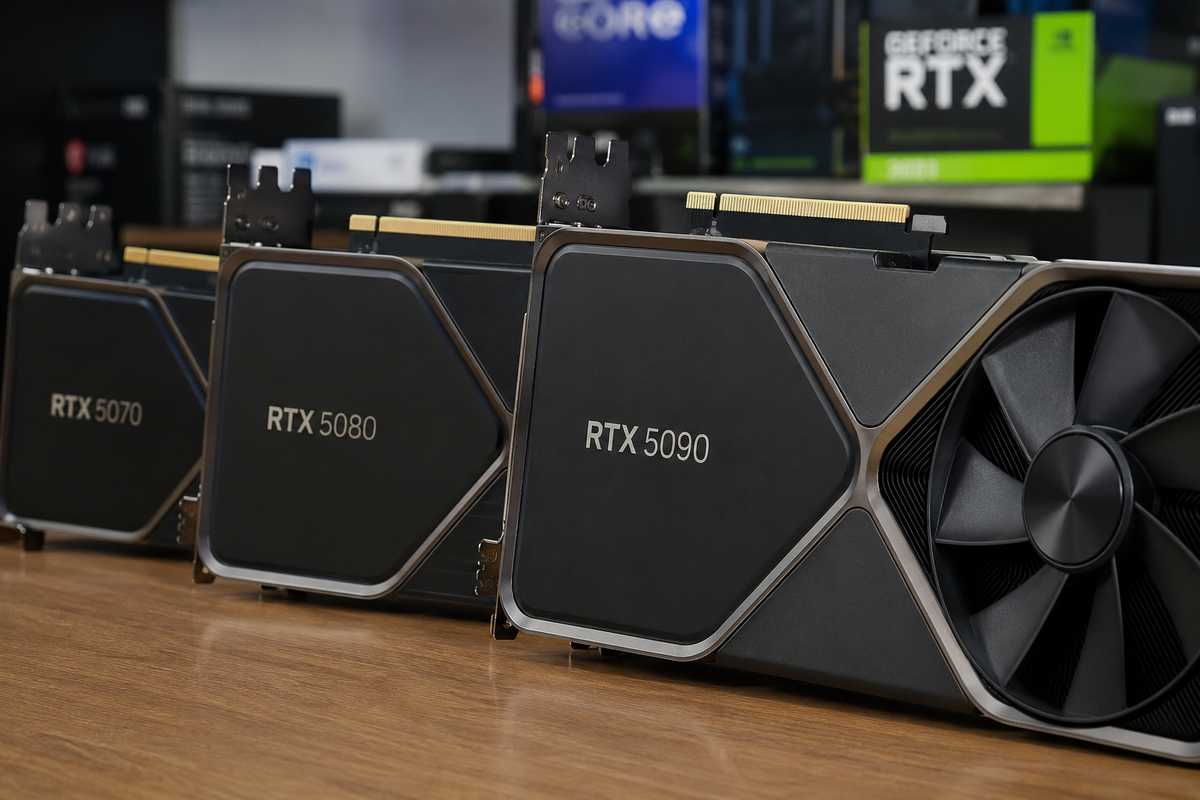
Graphics card prices continue to frustrate PC gamers and hardware enthusiasts across the United States, with some of Nvidia’s most powerful GeForce RTX 50-series GPUs climbing far beyond their original launch prices. Premium models from major board partners are now selling for thousands of dollars above Nvidia’s suggested retail pricing, highlighting ongoing supply pressures and strong demand for high-end hardware.
Premium Nvidia RTX 50-Series GPUs See Significant Price Increases
High-end versions of Nvidia’s GeForce RTX 5080 and RTX 5090 have become substantially more expensive at major U.S. retailers, including Best Buy and Amazon.
According to listings shared by Reddit users, the Asus ROG Astral GeForce RTX 5080 is now priced at $2,099.99 at Best Buy. That represents a $600 increase over its official launch MSRP of $1,499.99. The price is also $100 higher than the original MSRP of the flagship RTX 5090, which launched at $1,999.
The RTX 5090 has experienced even steeper price increases.
A recent Amazon listing shows the Asus ROG Astral RTX 5090 selling for $4,329.99, roughly $1,530 above its launch MSRP of $2,799.99. Meanwhile, the MSI Gaming Trio RTX 5090 has climbed to $4,299.95, approximately $1,900 more than its early 2025 debut price.
Mainstream RTX 5080 Models Remain Closer to MSRP
Not every RTX 50-series graphics card has seen the same level of price inflation.
Several mainstream partner models continue to sell much closer to Nvidia’s recommended pricing, offering more affordable options for consumers who don’t require premium cooling systems or factory overclocks.
For example:
- Zotac’s RTX 5080 Solid OC is currently listed on Amazon for $1,249.99.
- PNY’s RTX 5080 OC is available at Best Buy for $1,256.99.
These prices remain significantly below the premium Asus offerings, demonstrating that the largest markups are largely confined to flagship custom models rather than the broader RTX 5080 lineup.
Why Are Premium RTX Graphics Cards Becoming More Expensive?
Although Nvidia has not publicly identified a specific reason for the latest retail price increases, several industry developments may help explain the trend.
One widely discussed factor is the reported end of Nvidia’s Observed Pricing Program (OPP), previously highlighted by technology YouTuber der8auer. The program reportedly provided incentives for graphics card manufacturers to keep select products priced at or near Nvidia’s suggested retail price.
Without those incentives, board partners such as Asus, MSI, and Gigabyte may have greater flexibility to set higher retail prices, particularly for premium models with advanced cooling systems, factory overclocking, and other enhanced features. Manufacturers may also be passing increased production costs on to consumers.
AI Demand Continues to Pressure Hardware Supply
Another factor affecting pricing is the broader semiconductor market.
Growing demand for artificial intelligence hardware has contributed to higher DRAM prices, increasing the cost of GDDR7 memory used in Nvidia’s RTX 50-series graphics cards. At the same time, Nvidia has reportedly prioritized production of higher-margin products, including AI accelerators and select premium GPUs such as the RTX 5080.
That combination of rising component costs and constrained supply has made it more difficult for retailers to maintain inventory, particularly for enthusiast-grade graphics cards.
What It Means for U.S. PC Buyers
For consumers building or upgrading gaming PCs, the latest pricing suggests that premium RTX 50-series models may remain well above MSRP for the foreseeable future.
Nvidia’s Founders Edition cards continue to offer pricing closest to the company’s official recommendations. However, those models frequently sell out quickly, leaving many shoppers to choose between paying a substantial premium for high-end partner cards or opting for more affordable custom variants from other manufacturers.
As demand for AI hardware and premium GPUs remains strong, buyers hoping for widespread price normalization may need to wait longer before flagship RTX 5080 and RTX 5090 models return to their original launch pricing.

Ambrose Sherman writes for Hardwood Paroxysm, covering news, politics, business, technology, sport, entertainment, and lifestyle. He focuses on clear reporting, current affairs, and stories that matter to readers, providing reliable information in an accessible and engaging way.